
Rendering · Bournemouth and Dorset
External rendering. Bournemouth and Dorset.
Monocouche, sand and cement, or silicone. We say which one the elevation needs and why, and sometimes that is the cheaper one.
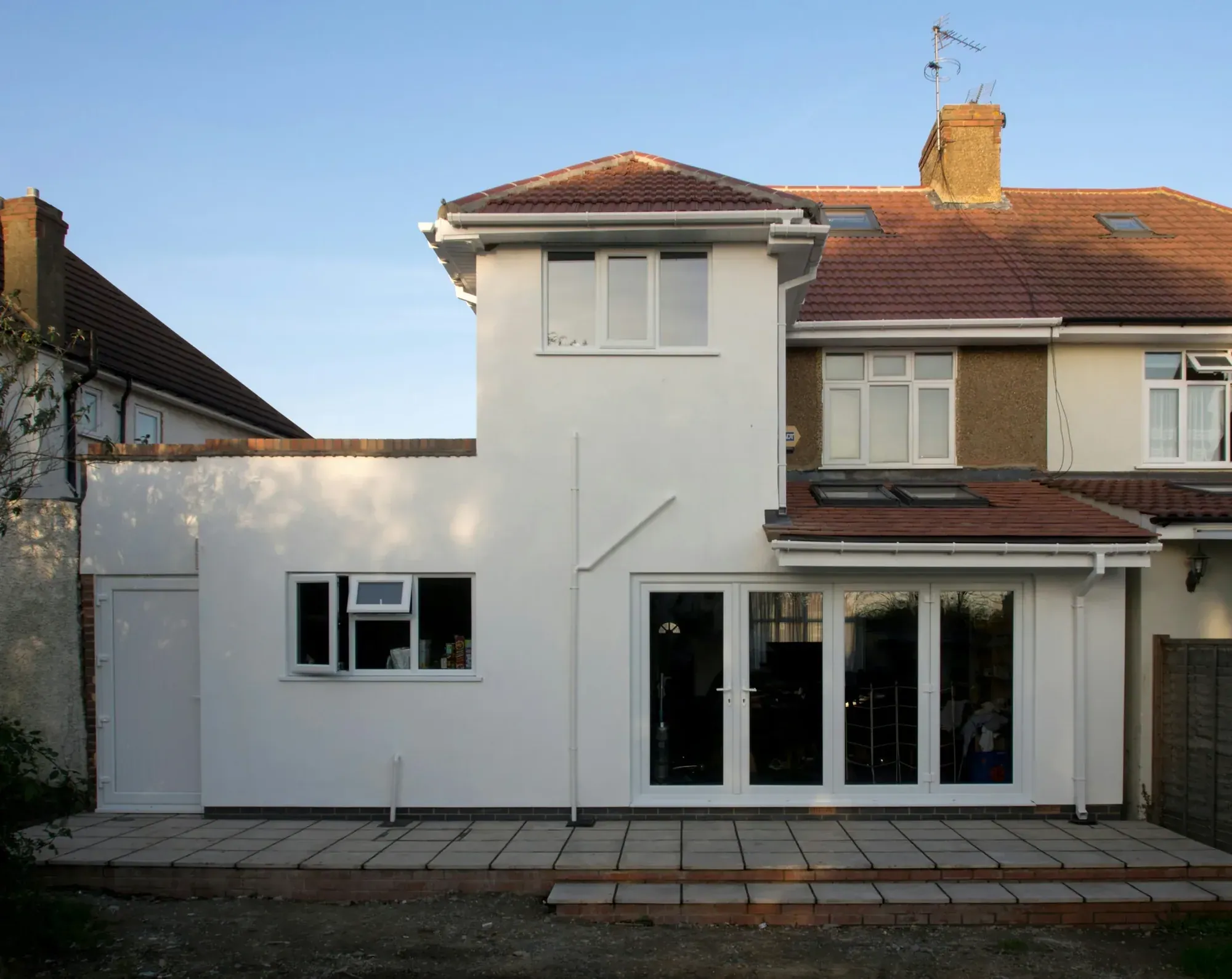
Salt air and driving rain off the Channel are hard on a rendered elevation. A through-colour system has no paint film to lift; a traditional sand and cement render is repainted on a cycle. Neither is always right, and the choice depends on the substrate, the exposure and the age of the house.
We render as part of a full package or as a standalone elevation, with the beads, reveals and detailing done properly because that is where render fails.
What the package includes
Monocouche
Factory-batched, through-colour, applied in one pass over a prepared substrate. No painting, and the colour holds. The usual answer for new builds and full re-renders on the coast.
Sand and cement
Scratch coat and float coat, site mixed, then painted after curing. The right answer for repairs, partial re-renders, period houses and anywhere a traditional or textured finish is wanted.
Silicone systems
A silicone through-colour topcoat over a base coat or external wall insulation. Sheds water, stays cleaner, flexes with the building. For the elevations that take the worst of the weather.
Beads, reveals and detailing
Stop beads, bellcast beads, movement joints, window reveals and cills formed and sealed. Render fails at its edges, so the edges get the time.
Systems and standards
- Through-colour monocouche systems such as K Rend
- Sand and cement, scratch and float coat
- Silicone topcoats over base coat or external wall insulation
From site
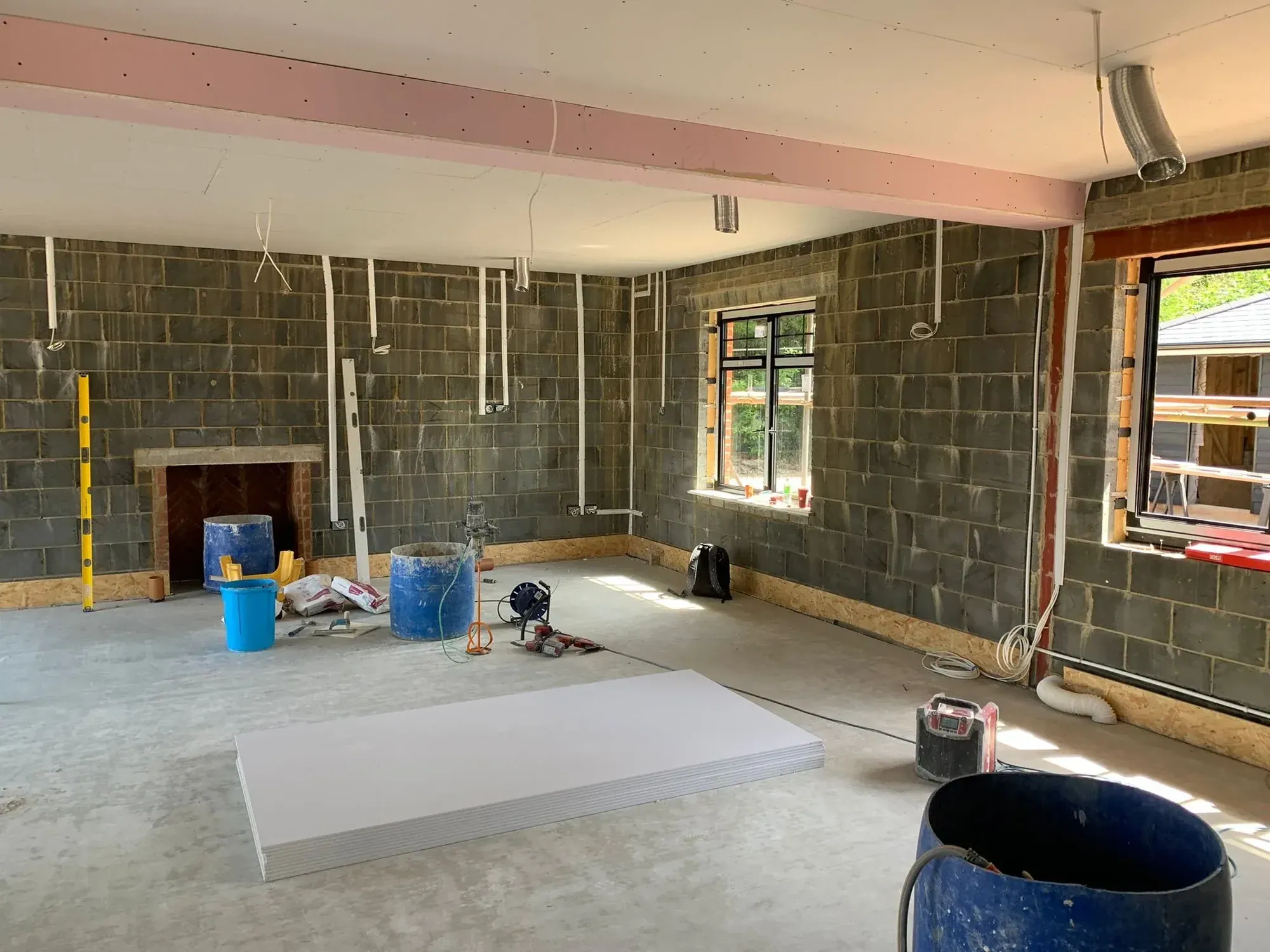
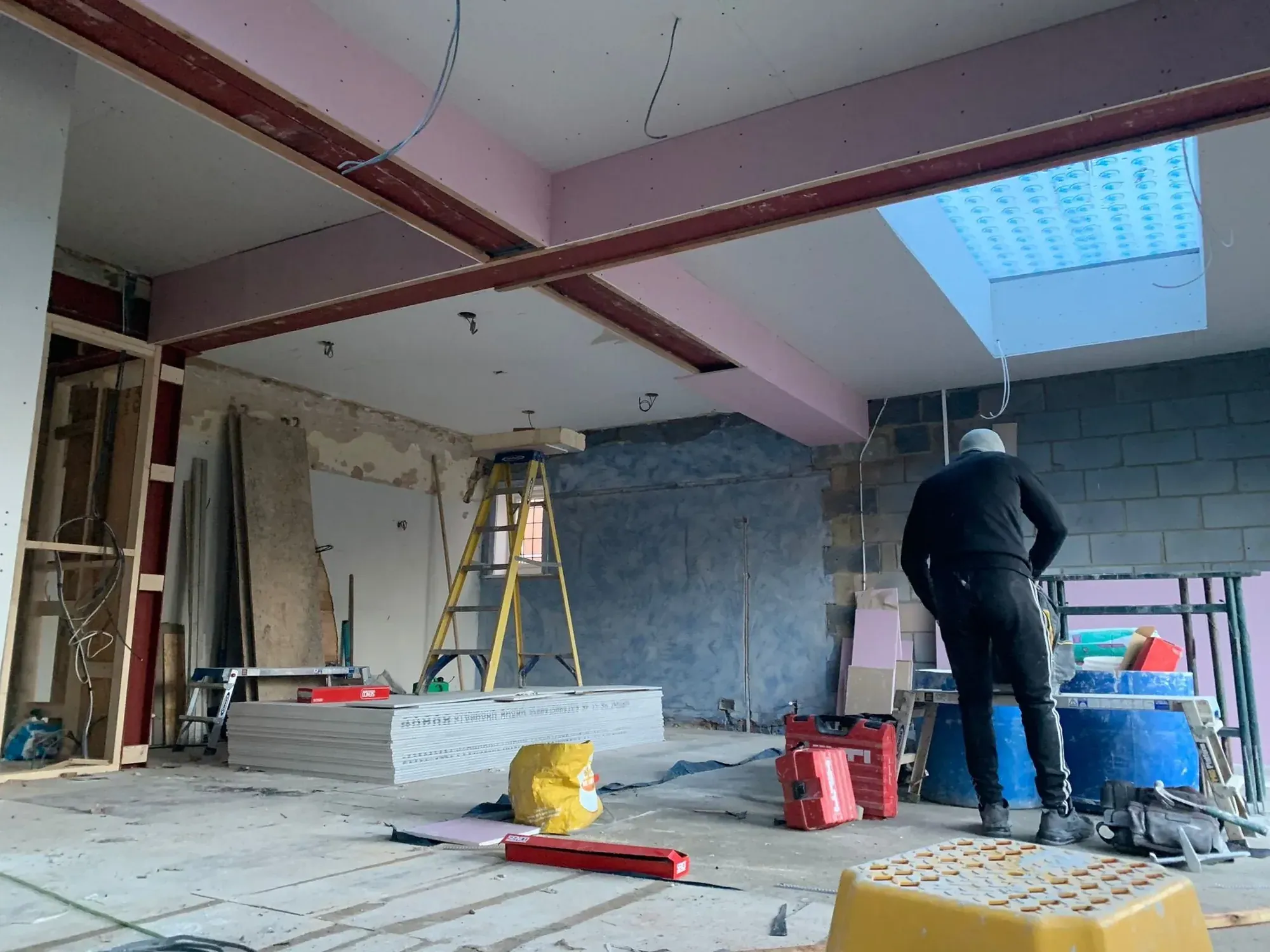
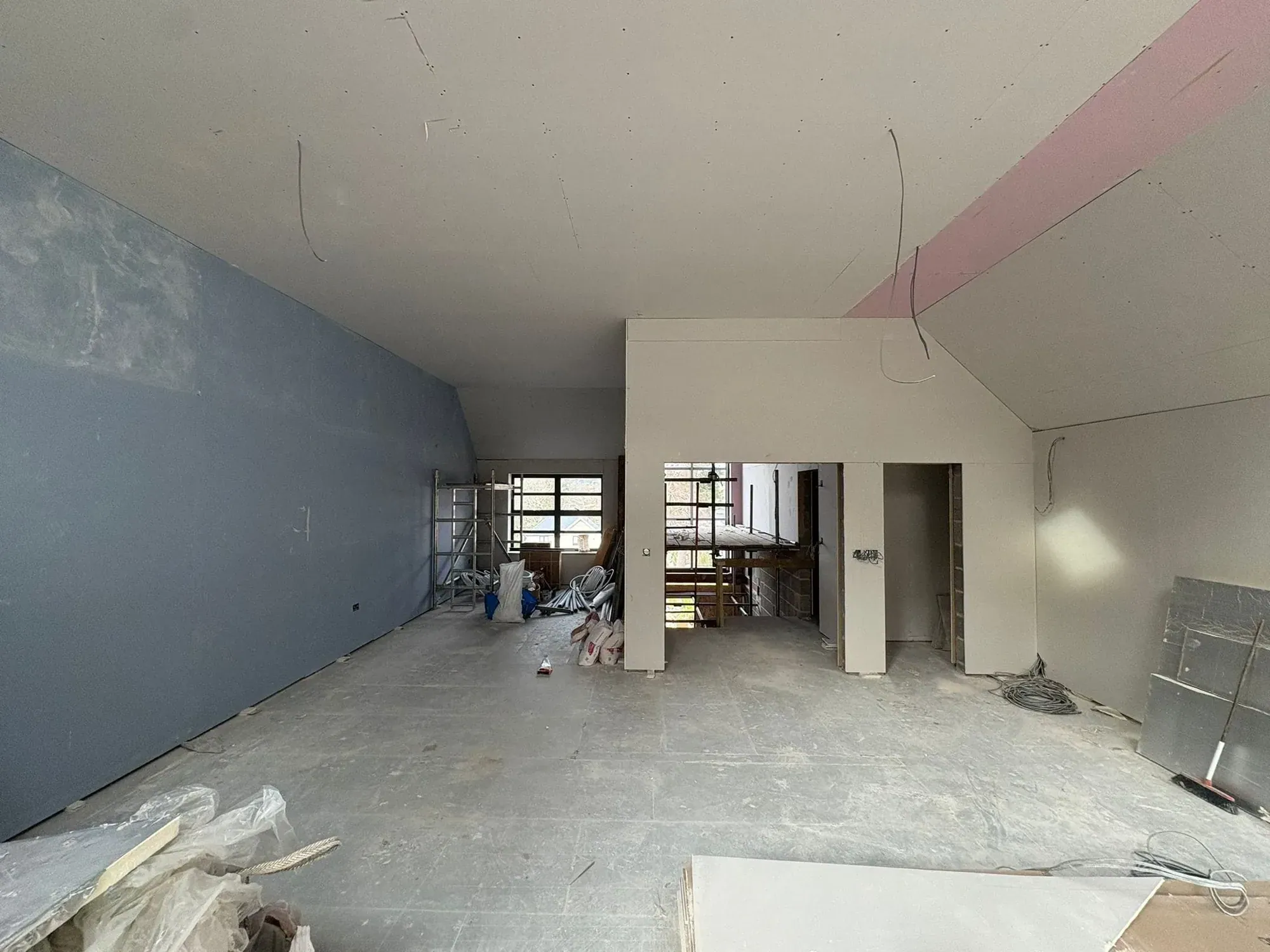
Boarding out, from blockwork shell to painted room
Questions builders ask
External rendering, answered before you ring.
Which system suits a house near the sea?
Usually a through-colour system, monocouche or silicone, because there is no paint film for the salt air to lift. A well-kept sand and cement render works on the coast too, but it is repainted more often.
How long does render last?
A properly applied through-colour system is expected to give decades with occasional washing. Sand and cement lasts as long but wants inspecting and repainting on a cycle. Preparation of the substrate matters more than the brand.
Can you render in winter?
Most systems need a minimum temperature during and after application, so winter work is planned around the forecast. In Dorset that means most of the year is workable with care.
Is scaffolding needed?
On anything above a single storey, yes, for a safe and consistent finish. We can arrange it or work from the main contractor's.
The rest of the package
Usually priced together.
Plastering
Skim over board, multi-coat on masonry, curved work and full plaster packages by the team that fixed the boards.
Read moreDrylining
Metal stud, MF ceilings, acoustic linings and boarding across large projects, by one directly employed team.
Read moreFeature ceilings and media walls
Lit rafts, perimeter troughs, curved bulkheads and media walls, framed in the same metal stud as the rest of the house.
Read more
Send us the drawings.
Drawings, a specification and a programme, or a phone call if it is quicker. We will come back with a price for the whole plastering and lining package and a straight answer on the dates.