
Plastering · Bournemouth and Dorset
Plastering for large refurbishments and new builds. Bournemouth and Dorset.
Skim over board, multi-coat on masonry, curved walls and bulkheads trowelled true, every room of a new build plastered in sequence. The finish the decorator does not have to sand.
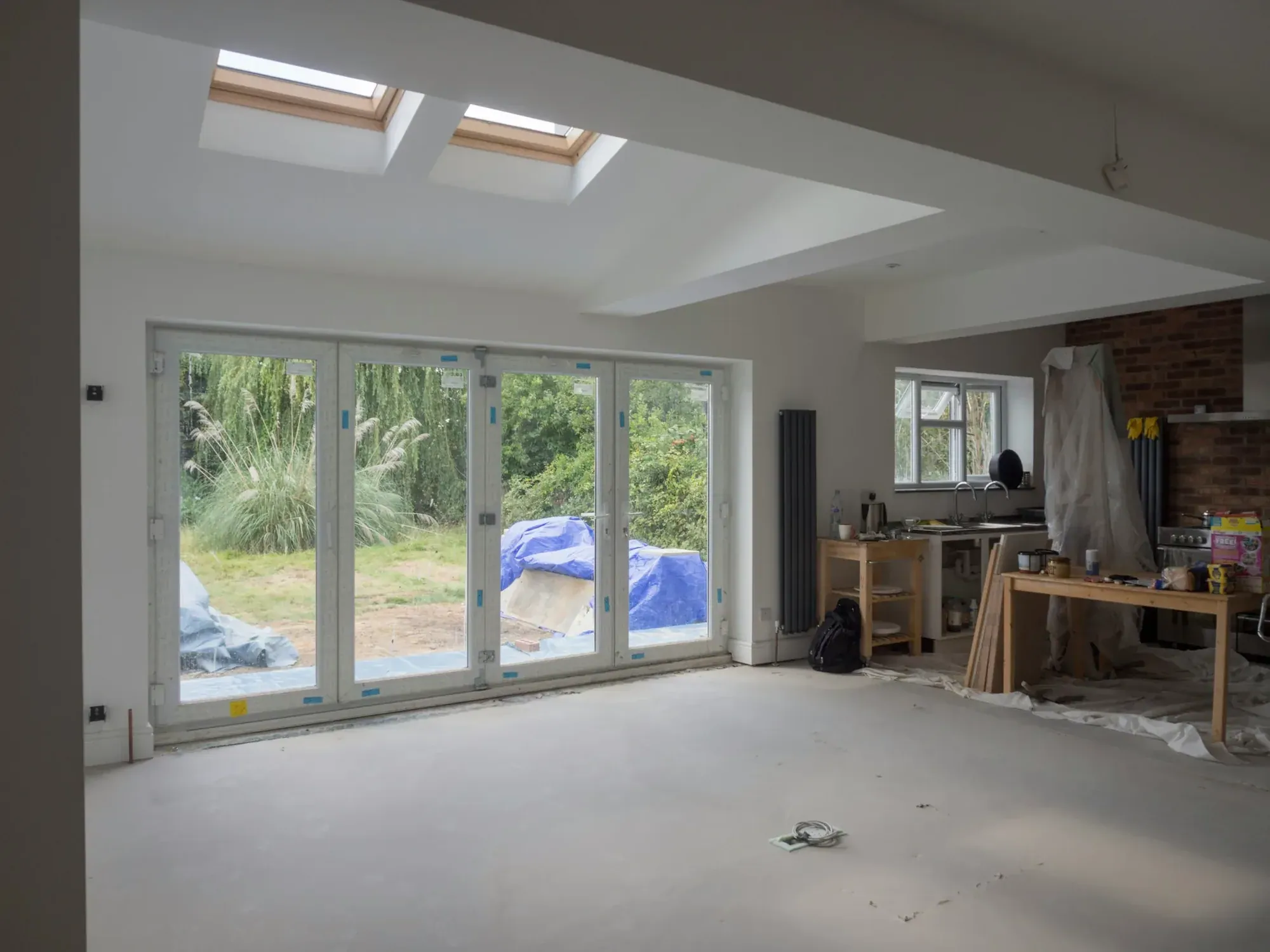
Plaster is the last trade before paint and the one the client runs a hand over. On a large house it is also a programme in its own right: rooms sequenced behind the boarders, drying time planned around the decorator, beads and shadow gaps set before anyone picks up a trowel.
Our plasterers have worked with our drylining team since the company started. They know how the boards were fixed because they watched it happen, which is why the skim goes on flat and the corners stay sharp.
What the package includes
Skim finish over plasterboard
Two-coat multi-finish over taped and filled board, trowelled to a paint-ready surface. Angle beads, stop beads and shadow gaps set first so every edge is straight.
Multi-coat on masonry
Hardwall or bonding coats on blockwork and brick, then a finish coat. Used where a wall is being plastered rather than lined, and on period work.
Full refurbishments and new builds
Every room in sequence, boarders a room or two ahead of the plasterers, drying time built into the programme so the decorator is not waiting on us.
Curved and shaped work
Curved walls, columns, bulkheads and balustrades skimmed true to the radius. This is the work that separates a lining contractor from a boarding gang.
Repairs and remedials
Blown plaster hacked off and replaced, damage from other trades made good, patching that disappears into the wall around it.
Systems and standards
- British Gypsum multi-finish, hardwall and bonding plasters
- Stop beads, angle beads and shadow-gap profiles in stainless and galvanised steel
- Skim, or taped and jointed, to suit the specified paint system
From site
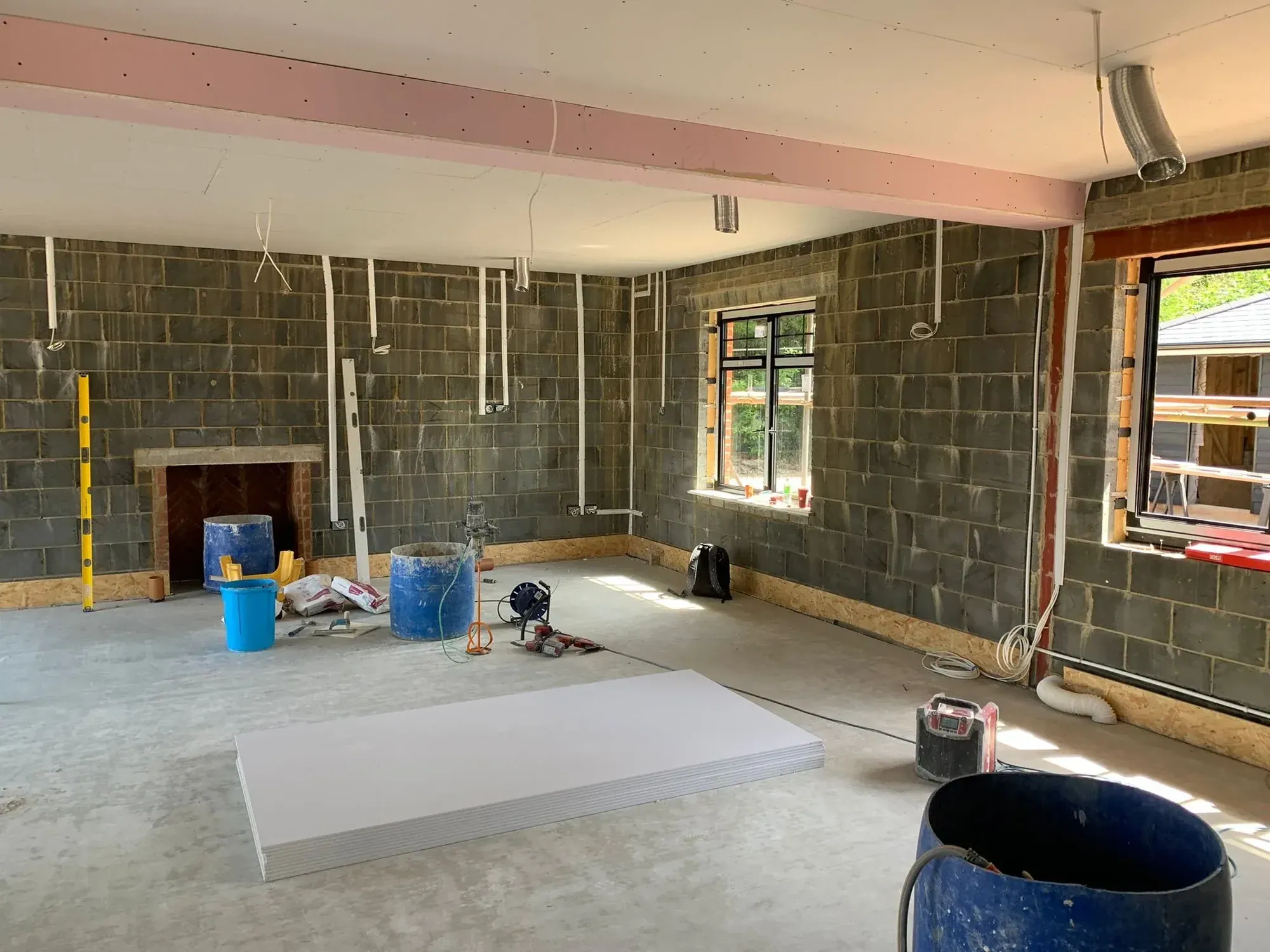
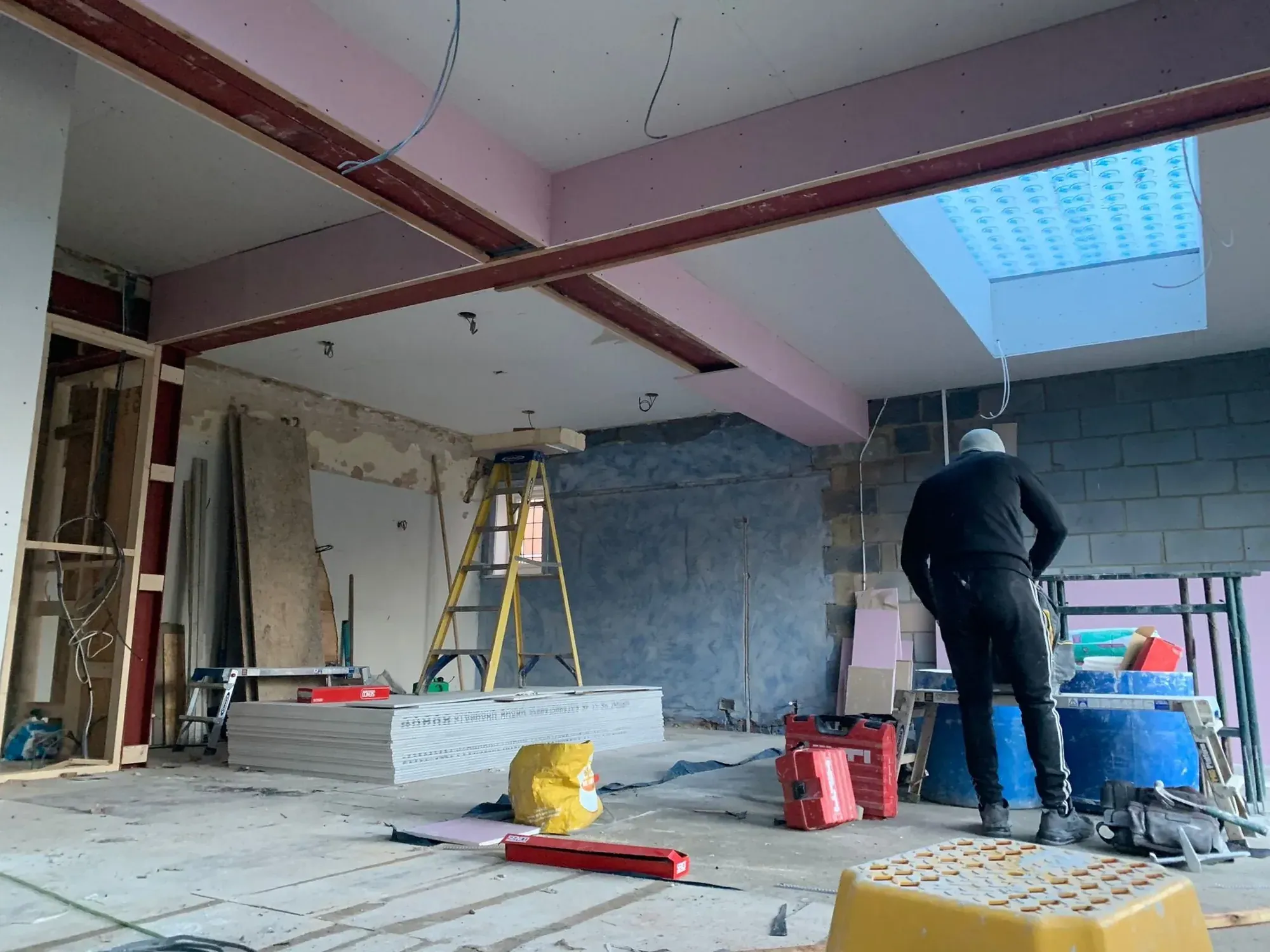
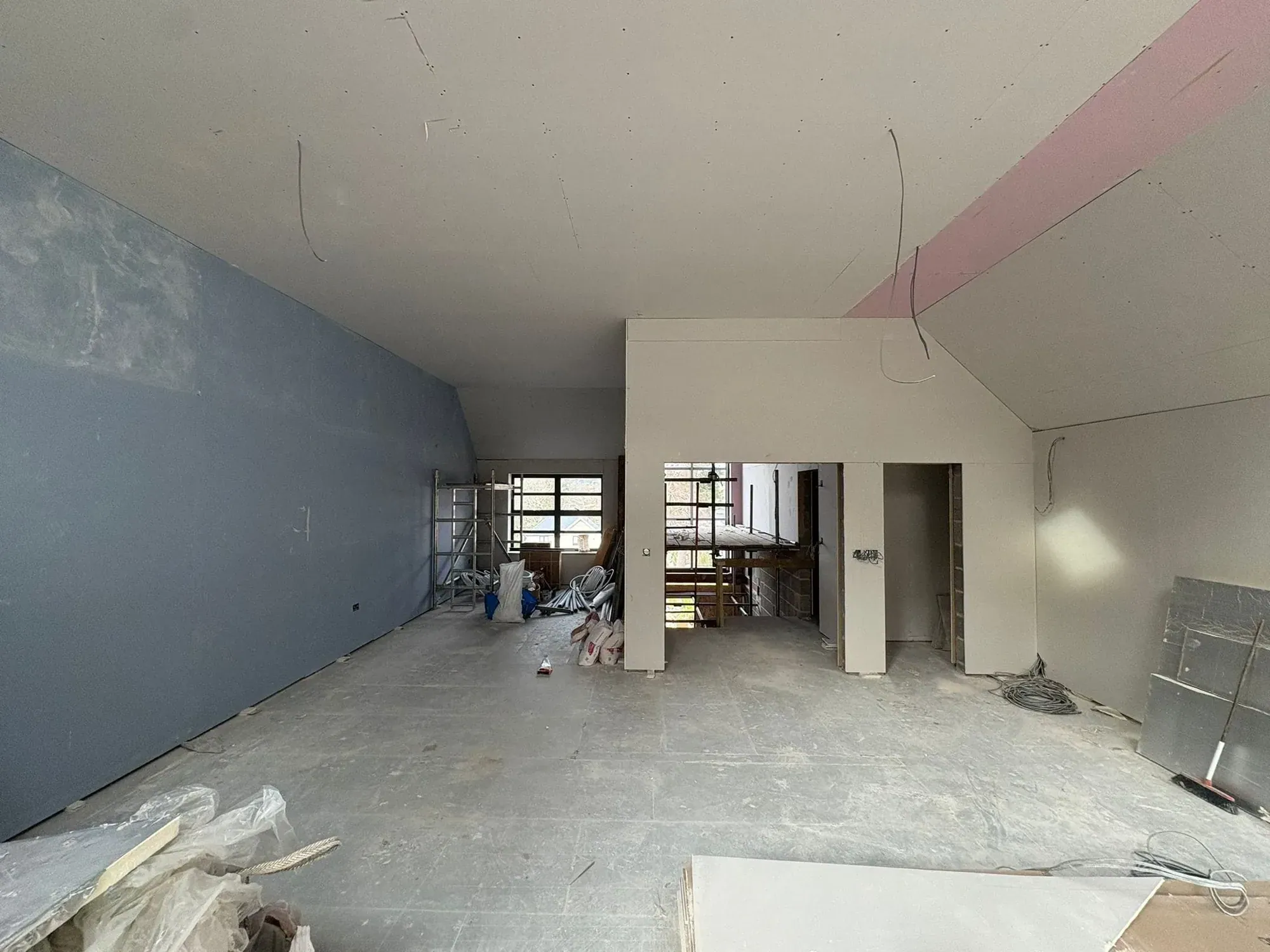
Boarding out, from blockwork shell to painted room
Questions builders ask
Plastering, answered before you ring.
How long before new plaster can be painted?
When it has dried to an even pale colour throughout, which is usually a week and can be several weeks in a cold, damp building. A mist coat goes on first. We will give a drying allowance in the programme rather than a promise.
Skim or full plaster?
A skim is a thin finish coat over board or sound plaster. Full plastering builds up coats on bare masonry. Most of a modern refurbishment is skim over board; period masonry walls sometimes want the full system. We will say which is right for each wall.
Can you skim over old plaster?
If it is sound and well bonded, yes. If it sounds hollow when tapped, it comes off first. Skimming over blown plaster fails, and we would rather tell you now.
Do you plaster after your own boarding?
Yes. The boarding and the skim are one package with one programme, which is the reason the finish is flat.
The rest of the package
Usually priced together.
Drylining
Metal stud, MF ceilings, acoustic linings and boarding across large projects, by one directly employed team.
Read moreFeature ceilings and media walls
Lit rafts, perimeter troughs, curved bulkheads and media walls, framed in the same metal stud as the rest of the house.
Read moreRendering
Monocouche, sand and cement or silicone, with a straight answer on which the elevation needs.
Read more
Send us the drawings.
Drawings, a specification and a programme, or a phone call if it is quicker. We will come back with a price for the whole plastering and lining package and a straight answer on the dates.